Home Business
Category:

Business

Advertisement

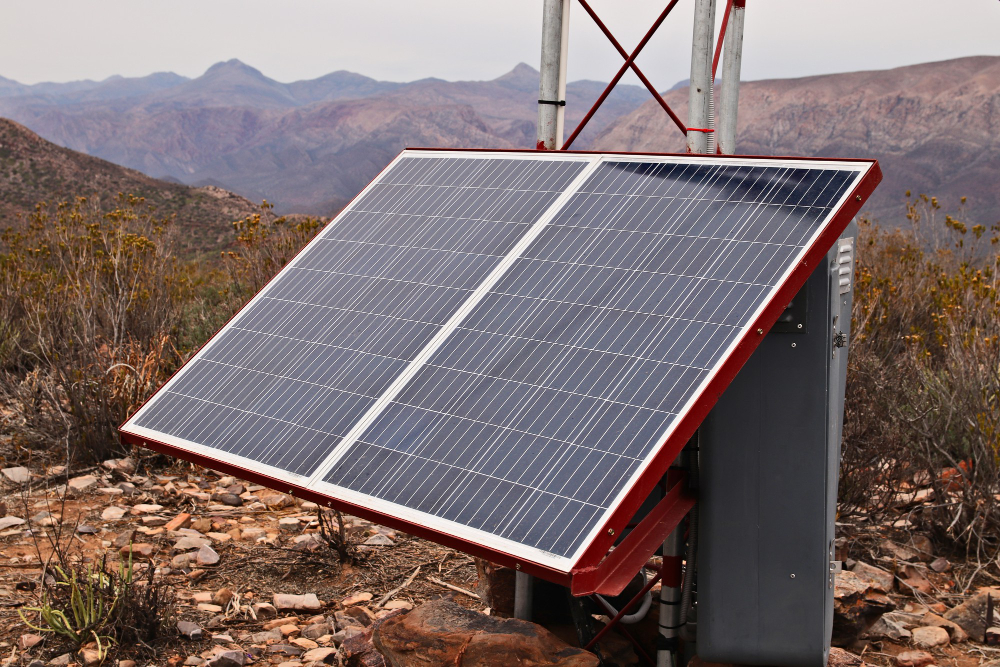
Rooftop solar has become a familiar sight across Australia, but the industry around it is changing. The opportunity is no longer limited to selling panels for detached houses. Batteries, energy monitoring, maintenance and more sophisticated electrical systems are creating work for installers, technicians and service businesses. For entrepreneurs, the market offers possibilities, although strong demand does not remove the need for careful financial planning and trustworthy advice.

The Clean Energy Council’s report for January to June 2026 recorded 1.89 gigawatts of rooftop solar installed across more than 180,000 installations, a record first-half result. It also reported 276,011 batteries installed during those six months, up 52 per cent from the previous half-year. By 30 June, more than 4.5 million Australian homes and small businesses had rooftop solar systems and more than 700,000 had battery storage. These figures illustrate the scale of interest, not a guarantee of profit for every supplier.

Several factors help explain the appeal. Many buildings have suitable roofs and Australian conditions provide substantial opportunities for solar generation. Households and businesses are also looking for ways to manage electricity costs and reduce exposure to energy-price volatility. Solar can offset grid electricity purchases when production and consumption line up, while batteries can shift some energy from sunny hours into the evening. Actual savings depend on usage, tariffs, equipment and system design.

A growing installed base creates demand beyond initial sales. Inverters may need replacement, panels can require inspection and customers may want help understanding monitoring software or changing electricity plans. Businesses specialising in diagnosis, maintenance and honest performance assessments may find opportunities alongside larger retailers.

Installation is a regulated trade, not a casual side business. The Clean Energy Regulator states that designers and installers seeking eligibility under the Small-scale Renewable Energy Scheme must meet accreditation and licensing requirements. Relevant installers need Solar Accreditation Australia accreditation, and electrical work must comply with state and territory rules. Products also need to meet applicable approval requirements. These safeguards matter because poor-quality electrical work can endanger customers and damage trust in the industry.


Pages: 1 2

Advertisement

A weekend away can look like a personal choice, but in regional Australia it can support a network of local businesses. Accommodation providers, cafes, service stations, tour guides, food producers and independent shops may all benefit when visitors spend time outside their home communities. The flow of spending can be especially important in towns where tourism provides opportunities alongside farming, manufacturing or other established industries.

Tourism Research Australia’s latest domestic figures offer a detailed view of how Australians are travelling. In the June quarter of 2026, residents took 27.1 million overnight trips and spent $25.7 billion on them. Compared with the same quarter a year earlier, overnight trips fell 2 per cent while spending increased 2 per cent. The figures suggest that higher total expenditure does not necessarily mean more visitors, and inflation can change the value of what travellers buy.

Accommodation accounted for $7.3 billion of overnight-trip spending during the quarter. Domestic airfares and takeaway and restaurant meals each accounted for $3.8 billion, while petrol represented $2.7 billion. Not all of this money was spent in regional areas, and an airfare may support businesses far from the final destination. Nevertheless, these categories show how tourism links different parts of the economy rather than benefiting hotels alone.

Day trips matter too. Australians made 74.2 million domestic day trips in the June quarter and spent $13.8 billion, according to the same source. A visitor who returns home that evening may still buy lunch, pay for entry to an attraction and purchase locally made goods. For smaller communities near major cities, day visitors can generate demand without placing the same pressure on overnight accommodation.

Regional destinations have distinctive strengths. A coastal town may draw visitors for walking tracks and wildlife encounters, while inland communities offer food trails, heritage sites or cultural activities. Festivals and sporting events can bring customers to businesses that otherwise depend heavily on local trade. Yet many destinations experience strong seasonal swings: a busy long weekend may be followed by weeks when staff and facilities are underused.

Pages: 1 2

Advertisement

Artificial intelligence is becoming part of everyday work across Australia, including in businesses too small to maintain a dedicated technology team. A bookkeeping practice may use software to organise documents, a retailer may draft product descriptions, and a workshop may explore tools that forecast stock requirements. The appeal is practical: completing routine tasks more efficiently. Yet AI can create new expenses and risks if businesses treat its output as automatically accurate.

The National AI Centre’s survey work shows adoption is significant but far from universal. Its analysis of December 2025 to February 2026 found that 43 per cent of Australian small and medium enterprises reported some level of AI adoption during the quarter, compared with 45 per cent in the preceding period. February’s individual result reached 44 per cent. These figures come from surveyed SMEs, not a direct count of every Australian business, and they do not indicate that all adopters use AI extensively.

Generative tools often attract attention because they can draft emails, summarise meeting notes or suggest marketing copy in seconds. More specialised applications include forecasting, fraud detection and data analysis. The National AI Centre tracks these uses separately, reflecting how different the technology can be from one workplace to another. A useful system for a large distribution business may be unnecessarily complex for a family-owned shop.

Potential savings are real only when they survive a careful comparison with costs. Subscription fees, training, integration and human checking all take time or money. An AI-written response that needs extensive rewriting may save little, while an automated scheduling tool that reduces double bookings could be genuinely valuable. Business owners should identify a measurable problem first and test whether a tool improves the result rather than purchasing a product simply because it carries an AI label.

Pages: 1 2

Advertisement

For Australian businesses, an interest-rate decision can be felt long before the next quarterly accounts are completed. A cafe owner may notice fewer extras ordered with lunch, a furniture retailer may see customers delay purchases, and a manufacturer may reconsider financing new equipment. These changes do not occur evenly, but they show why the relationship between borrowing costs and household spending matters well beyond the banking sector.

On 29 September 2026, the Reserve Bank of Australia increased its cash rate target by 0.25 percentage points to 4.60 per cent. The RBA pointed to inflation that remained elevated, higher global energy prices and pressure on the economy’s capacity to supply goods and services. Its aim is to restore price stability while supporting sustainable employment, not to determine what individual shops should charge.

Higher official rates influence the interest charged on many variable-rate loans, although lenders set their own products and rates. For households with mortgages, rising repayments can leave less income available for non-essential purchases. People considering a car, home renovation or major appliance may think harder about taking on debt. Others, particularly savers, can benefit from higher deposit rates. Consequently, the overall effect on spending depends on the financial position of different households.

The latest spending figures show why simple predictions can be misleading. According to the Australian Bureau of Statistics, household spending was unchanged in August 2026 after increases of 1.1 per cent in July and 0.9 per cent in June. Spending in current-price terms was still 6.8 per cent above August 2025. That yearly comparison includes the effects of price changes, so it should not be read as evidence that Australians bought 6.8 per cent more goods and services.

The August figures also reveal contrasting patterns. Spending on transport increased 2.3 per cent during the month, while recreation and culture fell 1.4 per cent and clothing and footwear dropped 1.0 per cent. Hotels, cafes and restaurants recorded a smaller increase of 0.8 per cent. A headline showing flat spending therefore conceals shifts between industries, some of which may be responding to fuel costs, seasonal events or individual decisions rather than interest rates alone.

Pages: 1 2

Advertisement

Australia’s business landscape is growing in number, but the headline total conceals important differences between a one-person operation and a company employing dozens of people. The latest annual count from the Australian Bureau of Statistics offers a useful snapshot of this changing economy. It shows entrepreneurial activity remains widespread, even while trading conditions present a difficult test for many owners.

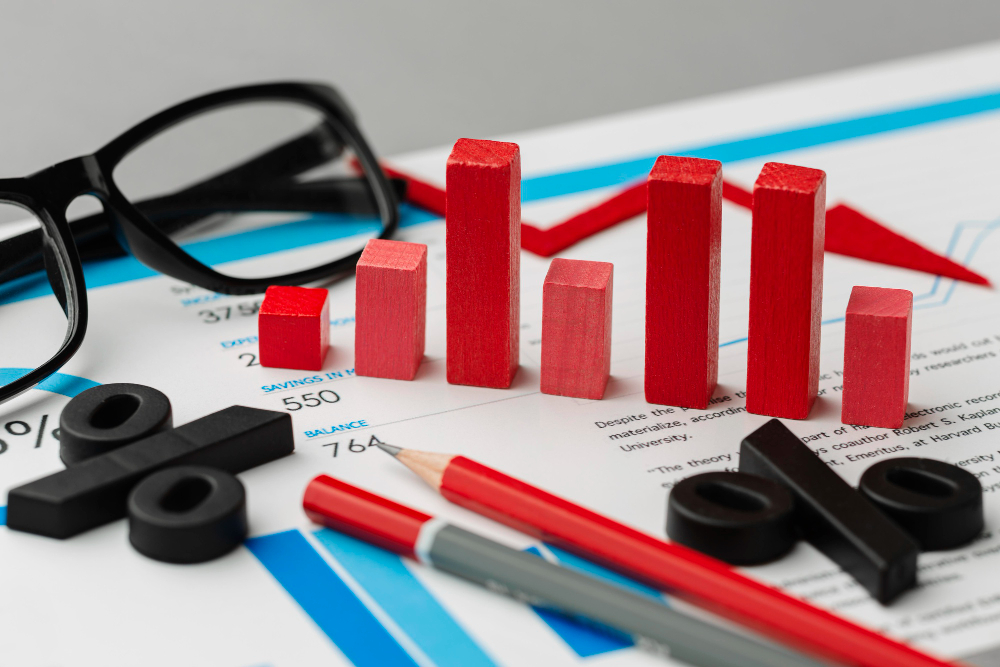
At 30 June 2026, Australia had 2,814,778 actively trading businesses, an increase of 85,130, or 3.1 per cent, over the financial year. The ABS recorded 460,461 business entries and 375,331 exits. These figures describe changes in the number of businesses counted by the statistical agency; they do not mean that every new registration represents a thriving shop, or that every exit was a bankruptcy. Businesses can cease trading, change structure or move between classifications for different reasons.

One of the clearest findings is how many firms operate without employees. Just 996,203 of the businesses counted were employing, leaving more than 1.8 million classified as non-employing. Some are sole traders earning their main income independently; others may be people running businesses alongside another job. Their economic contribution should not be dismissed, but their needs are different from those of a manufacturer with a large payroll.

Non-employing businesses increased by 4.8 per cent in 2025–26, while the number of employing businesses edged up only 0.2 per cent. The ABS also reported movement from employing to non-employing among surviving businesses. This does not establish that a particular owner dismissed staff: such categories can change for several reasons. It does suggest that counting business names alone is not enough to assess whether small enterprises are creating jobs.

Pages: 1 2

Advertisement

About us

logo

Disclaimer

Southern Meridian provides news, analysis and general information for informational purposes only. While we strive for accuracy, information may change over time. Content related to health, finance or legal matters should not be considered professional advice. Views expressed in articles do not necessarily reflect those of the editorial team.